Start Where You Are: Scaling AI Support Across a Multi-College System in Canvas

Overview
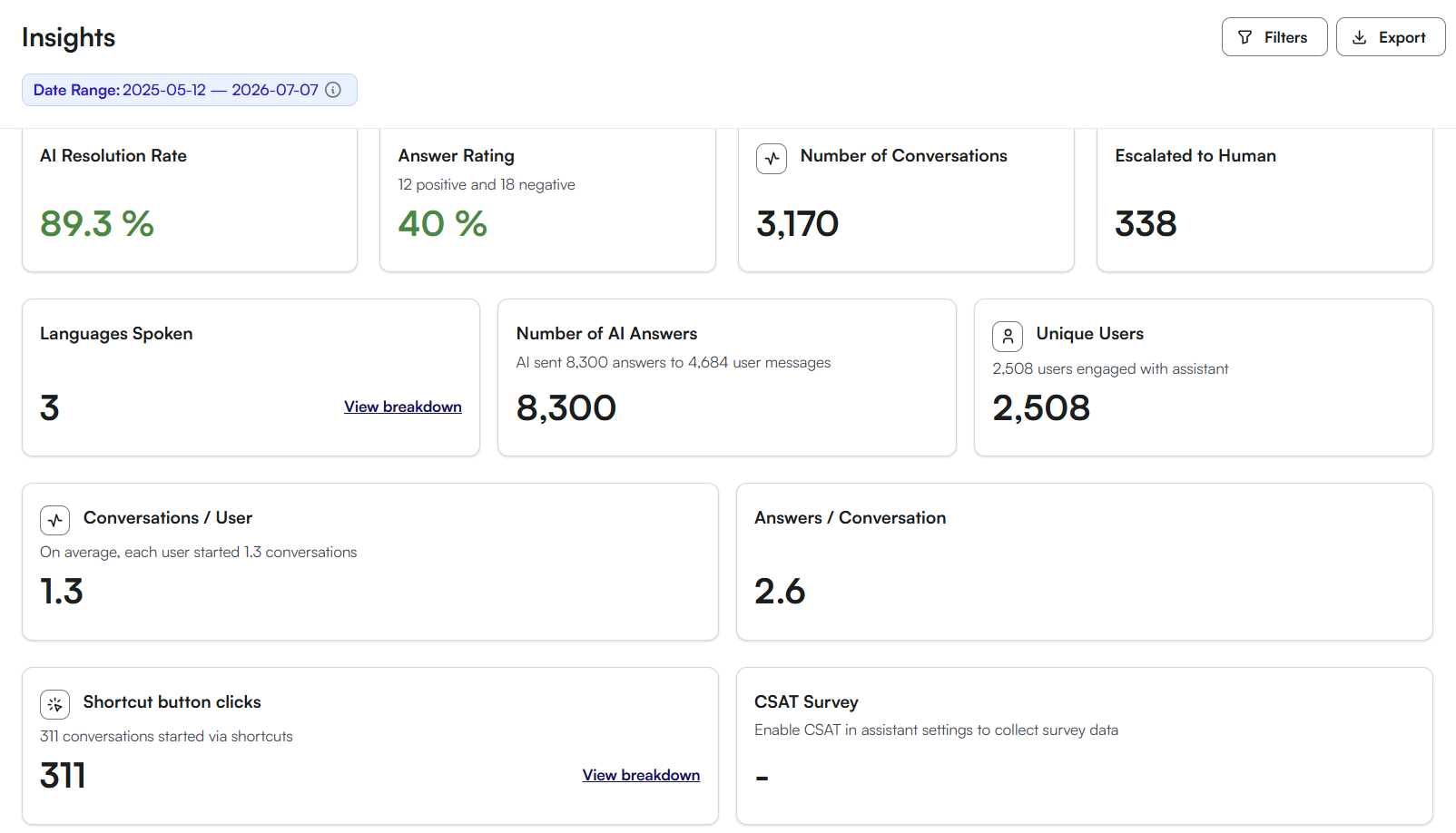
The Community College System of New Hampshire (CCSNH) partnered with LearnWise AI to deliver just-in-time academic support to students across a distributed multi-college system running on Canvas. Rather than waiting for institution-wide AI policy consensus, CCSNH started with a specific, well-defined use case: embed AI Campus Support directly inside Canvas where students were already working.
One year in, the deployment is serving learners across seven colleges and ten locations, resolving the majority of student inquiries within the platform, and reaching adoption well beyond the student body. Future plans involve extending use cases to faculty support, and closing knowledge gaps for staff inside the LMS.
Context & Challenge
The Community College System of New Hampshire is a distributed institution serving communities across New Hampshire through seven colleges and ten physical locations. Its learner population is mixed: traditional-age students, adult learners returning to education, dual enrollment high school students, and online-only students who don’t typically attend campus.
Supporting that range of learners across a distributed system introduced a familiar set of tensions:
- Distributed footprint, lean team: a dedicated AI initiative that started with one person and has since grown to three, working across seven colleges.
- Mixed learner needs: a student population spanning traditional-age, adult, working, and fully online learners, each with different questions, schedules, and expectations for support.
- Institutional AI uncertainty: no system-wide AI policy in place, and the sector-wide governance conversation still unfolding.
The core question: how do you move forward with AI when the institutional conditions for a comprehensive policy don't yet exist?
CCSNH's answer became the throughline of their deployment: you don't need an AI policy to start. You need a use case.
Solution: Building the Use Case in parallel to Policy
CCSNH deployed LearnWise AI Campus Support inside Canvas, focused on a single, well-understood problem: giving students immediate, in-context support where they were already working.
Focusing on the use case. CCSNH deployed AI Chat Support focused on a narrow, well-understood problem inside the active learning environment, proving concrete value first, and theoretical governance in parallel.
Keeping an institutionally owned, closed knowledge base. The most common early objection was whether AI would help students cheat. The answer was structural: the system runs on a closed, institutionally owned knowledge base, not the open web, not general course content. The institution always has full control over the information that goes in.
Building closed content and data systems. A closed system beats open databases for establishing genuine institutional trust. IT and academic leadership got comfortable with AI adoption because the boundaries of what the tool could and couldn't access were clearly defined from the start.
Canvas-Native, Just-in-Time. The support layer lives inside Canvas, appearing where students are already studying, rather than in a separate portal students would have to remember to find.
Governance conversations happened alongside the deployment, informed by real usage data rather than speculation. The tool's own operating boundaries served as the initial governance framework.
By the Numbers
- 89.3% AI resolution rate, tracked over the past year of deployment. Over every semester - fall, spring and summer - the metrics have landed consistently in the high 80s to low 90s. The AI resolution rate has remained a steady, realistic baseline for a three-person team managing the solution one year into wider usage.
- 52% of support sessions launched directly from active assignment pages, proof that embedding assistance inside the existing workflow outperforms a separate support portal.
- 74.2% of requests came in during regular hours (6am–6pm), versus 25.8% off-hours. This was the more surprising number: the assumption going in was that after-hours coverage was the gap to close. Instead, the shift has been toward more self-service during the day: less walking into the IT help desk, more resolving things independently in the moment.
- 87.9% of requests came from students, 12.1% from faculty. Faculty usage is the newer curve, and it's already pointing to where to go next: as usage grows, it's surfacing specific knowledge gaps and resource needs on the faculty side, a clear signal for where to expand the knowledge base.

The Partnership
CCSNH has described the partnership with LearnWise as proactive, easy to work with and supportive.
- Ease of Use: a seamless onboarding experience that ensured quick setup and immediate system alignment.
- Rapid Response: responsive, proactive support from the LearnWise team when things didn't go perfectly day to day.
- Support in Practice: the value of the partnership shows up in the operational reality: check-ins, quick turnarounds, and a team that's easy to reach, not just in the initial rollout.
Key Takeaways
- Use case beats policy. Institutions don’t need to begin with a perfect adoption policy; rather, a use case. Rather than waiting for the perfect guideline document, staying focused on delivering real, immediate value to students while safeguarding data, privacy and institutional knowledge is a good place to start.
- Closed beats open. For institutional trust, a closed knowledge base outperforms open databases. Privacy and controlled data security are the foundation of wide-scale academic adoption.
- Meet students where the friction is. Support that lives inside the workflow gets used. Support that lives beside the workflow is a portal students have to remember to find.
Looking Ahead
- Expanding into emerging use cases: faculty usage has started to reveal specific knowledge gaps, and the next step is building out more resources in those areas: turning early faculty engagement into a clearer, more supported path.
- AI Student Tutor: a possible future use case offering personalized course content, assignment, and study support.
- Continued governance development: institutional AI policy continuing to develop alongside deployment, informed by real usage patterns rather than theoretical frameworks alone.
As CCSNH's model matures, the use-case-first approach, paired with an honest read of what's still a work in progress, is emerging as a reference point for other distributed community college systems navigating the same questions.
This case study piece was adapted from the LearnWise AI Partner Session with CCSNH at InstructureCon 2026, “Learnwise: Start Where You Are: Scaling AI Support Across a Multi-College System in Canvas”



.png)


.webp)
%20(1).webp)
%20(1).webp)